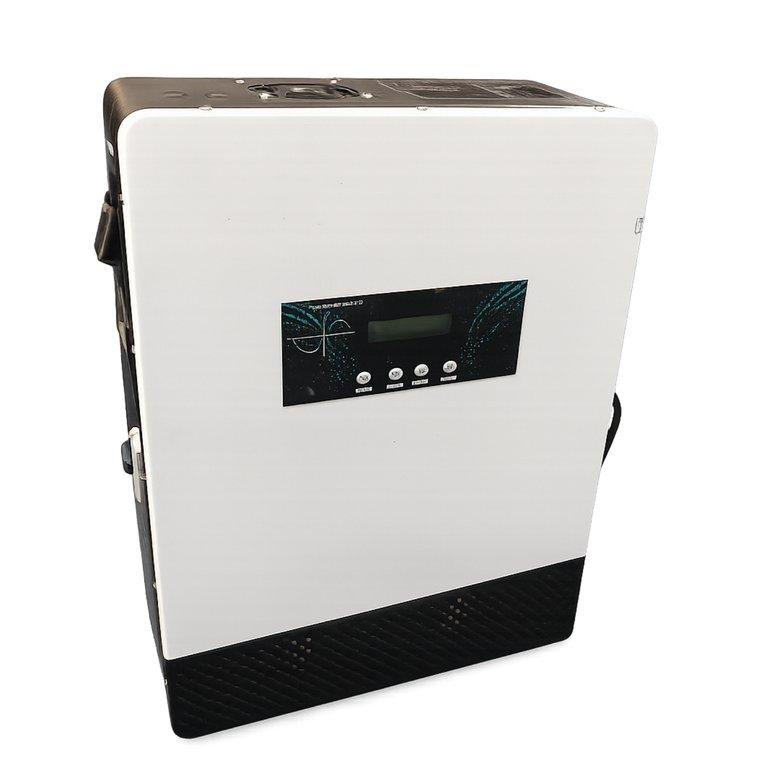
LITHIUM INVERTER 1100VA 12.8V
Key Feature
• Lithium Battery Inverter - Built for a 12.8V lithium battery system with pure sine wave AC output.
• 1100 VA Capacity Class - Provides the stated VA class for correctly sized home, office and backup loads.
• Battery-to-AC Power Conversion - Converts stored DC energy into usable AC backup power while operating with the matched battery system.
• 12.8V DC Platform - Uses the specified battery-voltage class for cable, protection and charging-system design.
• Backup Power Integration - Suited to household, office, networking, CCTV and custom lithium energy-storage applications.
₹7,180.00
Lithium Inverter 1100 VA 12.8V
The Lithium Inverter 1100 VA 12.8V is a lithium-battery inverter specified for a 12.8V battery system and a 1100 VA AC capacity class with pure sine wave output. It converts stored DC energy from the battery into usable AC power for backup loads and is intended to operate as part of a matched lithium energy system rather than as a stand-alone battery-protection device.
The 12.8V voltage class establishes the DC side of the installation, while the 1100 VA figure describes the inverter capacity in volt-amperes. VA and watts are related but not identical because the real power available to a load depends on power factor and the inverter design. Load planning should therefore use the electrical demand of the connected equipment rather than treating the VA figure as battery capacity.
The 1100VA 12.8V product is documented for LiFePO4 battery backup and pure sine wave AC output, making it appropriate for common household and office electronics when the connected load stays within the inverter capability.
An inverter is not the battery BMS. The BMS protects the cells and reports battery conditions according to its own architecture, while the inverter controls AC conversion and battery charging according to its settings. Good lithium integration keeps the charger voltage, low-voltage cut-off and current demand inside the battery system limits so neither device is forced to compensate for an unsuitable configuration.
Backup time depends on battery watt-hours, inverter efficiency and load power rather than the VA rating alone. A light networking and lighting load can run much longer than a heavy appliance load on the same battery. Cable size, DC protection and terminal quality are equally important because low-voltage battery systems can carry high current even when the AC load appears moderate.
Applications
• Home backup systems supplying lighting, fans, networking and selected household loads.
• Solar energy-storage installations combining photovoltaic input, battery storage and AC loads.
• Small-office and commercial backup systems requiring automatic transition between available energy sources.
• Off-grid and weak-grid sites where battery storage supports continuous AC power availability.
• CCTV, telecom, networking and control equipment requiring stable inverter-backed power.
• Custom ESS and inverter-battery projects built around the stated power and battery-voltage class.
Installation Guide
Have a competent installer isolate all AC, battery and PV sources before wiring or accessory installation. Mount the equipment with the ventilation clearances required by the system, route battery and solar conductors away from sharp edges, and use cables, terminals and protective devices sized for the actual current. Establish polarity and source separation before energising any DC connection.
Commission the system progressively. Establish battery voltage and polarity, apply the required inverter settings, energise one source at a time and observe the display or monitoring data before connecting the full load. Test normal source transfer and charging behaviour with a controlled load rather than beginning at maximum demand. Stop commissioning if wiring heats, protection trips repeatedly or the system reports unstable electrical values.
Record the inverter model, battery settings, source priorities, cable sizes and commissioning measurements with the installation. Keep ventilation paths clean and inspect high-current terminals during service for heat marks or looseness. Changes to battery type, PV array, connected loads or parallel architecture require renewed engineering review because earlier settings may no longer suit the revised system.
Why Choose ARB Accessories?
ARB Accessories supplies hybrid inverters and monitoring accessories alongside lithium battery packs, BMS products, solar components, ESS connectors, high-current cable, fuses and battery hardware for Indian system builders. Prepare your enquiry with the 1100 VA inverter class, 12.8V battery voltage, battery chemistry, expected load power and required backup duration so the inverter or accessory can be matched to the complete electrical architecture rather than selected from power rating alone. System performance also depends on conductor sizing, protective devices, ventilation and battery capability, because an inverter can only deliver its intended output when the surrounding electrical path is designed for the same power level.
Product overview
Lithium Inverter 1100 VA 12.8V The Lithium Inverter 1100 VA 12.8V is a lithium-battery inverter specified for a 12.8V battery system and a 1100 VA AC capacity class with pure sine wave output.
- SKU
- 26001369
- Category
- HYBRID INVERTER
- Unit
- PCS
- Minimum order
- 1 PCS
- Availability
- In Stock
Review key features and technical specifications before ordering. Contact ARB Accessories if you need compatibility or bulk-order guidance.