Get notified when this product is back in stock.
Key Feature
• Lead-Acid EV Charging - Designed for 48V nominal lead-acid traction-battery systems used in compatible electric two-wheelers and light EVs.
• 3A Charging-Current Class - Provides the stated charger current category for the matching battery system and charging-time requirement.
• Managed Charging Architecture - Converts AC supply into controlled lead-acid battery charging rather than acting as a fixed-voltage DC power supply.
• AQ Charger Series - Uses the AQ product-family identity with the stated voltage/current combination as the exact replacement specification.
• 48V EV Battery Integration - Suited to compatible scooters, e-bikes and mobility systems built around 4 x 12V lead-acid batteries.
₹449.90
Get notified when this product is back in stock.
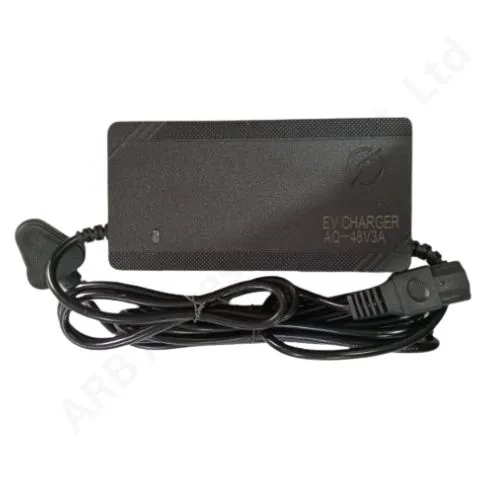
AQ 48V 3A Lead-Acid EV Charger
The AQ 48V 3A Lead-Acid EV Charger is a dedicated charger for a 48V nominal lead-acid electric-vehicle battery system with a 3A charging-current class. A typical 48V lead-acid traction pack uses 4 x 12V lead-acid batteries in series. The voltage printed on the charger identifies the battery-system class; it is not a statement that charging remains fixed at exactly 48V throughout the cycle.
Lead-acid charging is controlled power conversion rather than simple DC supply. Battery voltage rises above the nominal pack label during charging, then the charger reduces or manages current as the battery approaches full charge. The 3A figure describes charging-current capability and influences charging time, while battery capacity, state of charge and condition determine the actual duration. A charger for lithium chemistry is not a substitute because lithium and lead-acid batteries require different voltage behaviour.
AQ is widely sold across 48V, 60V and 72V lead-acid classes with both 3A and 4A variants, making the printed voltage/current combination the important replacement identifier. Indian seller pages for this category repeatedly describe wide AC-mains input, compact EV use and charger-side protections such as overcurrent, overvoltage, short-circuit or thermal protection. Those features belong to the charger electronics, while the vehicle connector, pack wiring and battery condition remain separate parts of the system.
A common technical mistake is to treat the nominal 48V battery label as the charger's exact charging voltage. Lead-acid batteries use charging voltages above nominal during bulk and absorption behaviour, followed by a finishing or float stage depending on battery type and charger design. For this batch, the reliable customer-facing selection data are the nominal lead-acid system class and stated charging current; exact stage voltages are left to the charger calibration and battery specification.
The 3A current class should also be considered with battery capacity, connector contacts and cable condition. Higher current can reduce charging time on a suitable battery bank but increases heat and current through the charging lead and terminals. A charger cannot restore weak cells, repair severe sulphation or correct a damaged series string. Repeated early cutoff, abnormal heating or unstable charging behaviour calls for separate battery and charger diagnosis.
Applications
• Electric scooters using a 48V nominal lead-acid traction battery system.
• E-bikes and low-speed electric two-wheelers built around 4 x 12V lead-acid batteries.
• Mobility scooters and light utility EVs using the same nominal lead-acid battery class.
• Workshop replacement charging for compatible EV battery packs and service vehicles.
• Fleet charging stations that keep dedicated chargers assigned to known battery voltage and connector configurations.
• Battery-service environments requiring a portable AC charger for the matching lead-acid pack class.
Installation Guide
Place the charger on a dry, ventilated surface with free air around the housing and leads. Identify the battery as the same nominal lead-acid voltage class as the charger, inspect the charge connector for damaged pins or loose contacts, and keep the charger away from conductive debris, standing water and external heat.
Start charging with the vehicle switched off and observe the first part of the cycle. The connector, leads and charger housing should remain mechanically secure without arcing, abnormal smell or localised overheating. Status lamps or displays, where fitted on the supplied variant, are operating aids rather than substitutes for electrical diagnosis.
Record the charger series, nominal battery voltage, charging-current class and connector pinout with the vehicle or fleet service record. Do not interchange chargers only because the plug fits; battery chemistry, pack voltage and polarity must stay consistent. Changes to battery series count, connector wiring or chemistry require the charging system to be treated as a new electrical configuration.
Why Choose ARB Accessories?
ARB Accessories supplies lead-acid EV chargers alongside battery packs, charging connectors, cables, fuses, DC-DC converters, controllers and service parts for Indian EV workshops and assemblers. Prepare your enquiry with the AQ series, 48V nominal battery class, 3A charging current, battery capacity and connector pinout so the replacement charger matches the complete vehicle charging system.
Product overview
AQ 48V 3A Lead-Acid EV Charger The AQ 48V 3A Lead-Acid EV Charger is a dedicated charger for a 48V nominal lead-acid electric-vehicle battery system with a 3A charging-current class.
- SKU
- 26001427
- Category
- LEAD IMPORTED CHARGER
- Brand
- AQ
- Unit
- PCS
- Minimum order
- 2 PCSs
- Availability
- Out of Stock
Review key features and technical specifications before ordering. Contact ARB Accessories if you need compatibility or bulk-order guidance.
Datasheet
Datasheet