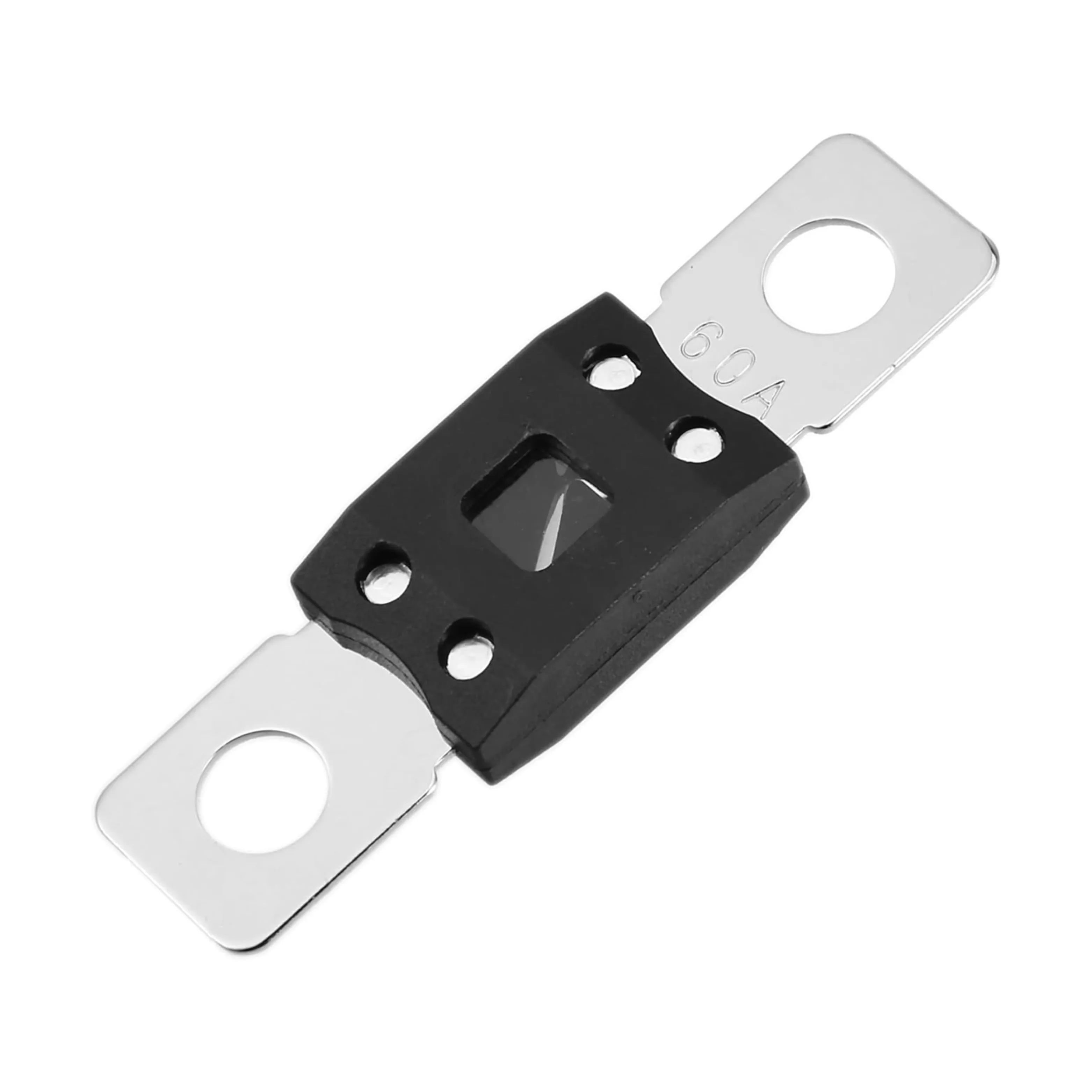
ANL FUSE 60A
Key Feature
• ANL High-Current Fuse - Uses the bolted ANL fuse format for replaceable protection in battery, inverter and DC distribution circuits.
• 60A Current Class - Provides a 60A nominal fuse rating for coordinated protection of high-current conductors and equipment.
• Time-Current Protection Behaviour - Responds to overload magnitude and duration so severe fault current opens the circuit more rapidly.
• Bolted Power-Path Integration - Installs in an ANL holder with secure high-current connections at both ends of the fuse element.
• ESS & Inverter Protection - Suited to battery banks, solar storage, UPS, inverter and industrial DC systems using compatible protection design.
₹55.00
ANL Fuse 60A
The ANL Fuse 60A is an ANL-format 60A fuse for high-current battery, inverter and DC distribution circuits. The bolted ANL format creates a secure, replaceable fuse link in the main power path, while the 60A marking identifies the current class used when coordinating the fuse with the cable, battery source and downstream equipment.
ANL fuses are used where current levels and conductor sizes are larger than typical small blade-fuse circuits. The fuse element forms a deliberate weak point in the electrical path so severe overcurrent opens the circuit before uncontrolled heating damages the cable or surrounding equipment. The fuse does not manage battery charging, cell protection or normal switching; those functions remain with the charger, BMS, contactor or breaker used elsewhere in the system.
The 60A rating describes the nominal fuse class, not a command to operate the connected load continuously at exactly 60A. Fuses respond according to a time-current characteristic: modest overloads can persist longer than severe faults, while a short-circuit condition drives much faster opening. The correct rating therefore sits above normal operating demand but below the current level that would allow the protected conductor to overheat.
ANL installations depend heavily on the bolted joint. Flat fuse contact surfaces, suitable washers and stable fastening pressure keep resistance low at both ends of the fuse. Cable lugs and holder studs must remain mechanically secure because a poor joint can create local heat without a true overcurrent fault. The protective cover around an ANL holder also helps separate the energised fuse hardware from tools and surrounding conductive parts.
A blown ANL fuse is a diagnostic event rather than a consumable to uprate automatically. Replacing it with a higher-current fuse can remove protection from the cable that the original design intended to protect. Battery systems should therefore record the selected ANL rating, conductor size and load profile together. After a fuse operates, the circuit should be inspected for overload, short-circuit damage, loose terminals or equipment failure before normal service resumes.
Applications
• Battery-pack main and branch circuits requiring sacrificial overcurrent protection.
• Inverter and UPS DC wiring where a replaceable fuse protects the downstream cable path.
• Solar-storage battery assemblies with a dedicated fuse positioned close to the power source.
• Electric-vehicle auxiliary or power circuits using a compatible holder and the same fuse family.
• Workshop test rigs and service harnesses that need visible, replaceable circuit protection.
• Custom lithium battery and DC distribution systems designed around the stated current class.
Installation Guide
Isolate the battery source and remove charging and load connections before working on the fuse circuit. Install the fuse in a holder made for the same physical fuse format, keep contact surfaces clean and use conductors sized for the protected circuit. Position the fuse close to the source side of the conductor so the length of unfused wiring is kept short, and protect the assembly from tools, loose hardware and enclosure edges.
Commission the protected circuit with a controlled load. Establish correct polarity and source voltage, then energise progressively while observing the fuse holder, cable and terminals. A correctly assembled circuit should not develop abnormal temperature rise at the fuse contacts during normal operation. Repeated fuse opening, visible heat damage or unusual voltage drop indicates a fault, undersized conductor, poor connection or unsuitable fuse coordination that requires corrective work.
Record the fuse format, current class, holder type and protected conductor size with the battery or equipment documentation. Replace an operated fuse with the same engineered family and rating unless the electrical design itself has been revised. During maintenance, inspect terminal grip, bolted joints, holder condition and signs of thermal stress. Changes to inverter power, motor load, battery voltage or cable size require a fresh review of fuse coordination.
Why Choose ARB Accessories?
ARB Accessories supplies fuses and fuse holders alongside battery cells, BMS boards, cable, terminals, busbars, breakers and battery-pack hardware for Indian builders and service teams. Prepare your enquiry with the required fuse family, 60A current class, system voltage, conductor size and holder format so the protection device fits the intended battery, inverter or DC circuit.
Product overview
ANL Fuse 60A The ANL Fuse 60A is an ANL-format 60A fuse for high-current battery, inverter and DC distribution circuits.
- SKU
- 26001215
- Category
- FUSE
- Unit
- PCS
- Minimum order
- 10 PCSs
- Availability
- In Stock
Review key features and technical specifications before ordering. Contact ARB Accessories if you need compatibility or bulk-order guidance.
Datasheet
Datasheet